Massage guns used to be something only professional athletes had. Now they're common in gyms, offices and homes across Pakistan, and for good reason. After a heavy workout, a cricket match or a long day of sitting, a few minutes with a massage gun can make stiff muscles feel much looser.
What does a massage gun do?
A massage gun uses percussive therapy: the head moves back and forth very quickly, delivering short, rapid pulses deep into the muscle. This helps to:
- Warm up muscles before exercise
- Ease soreness and tightness after a workout
- Relax stiff shoulders and back after long hours of sitting
- Improve how flexible and loose a muscle feels
Which head should you use?
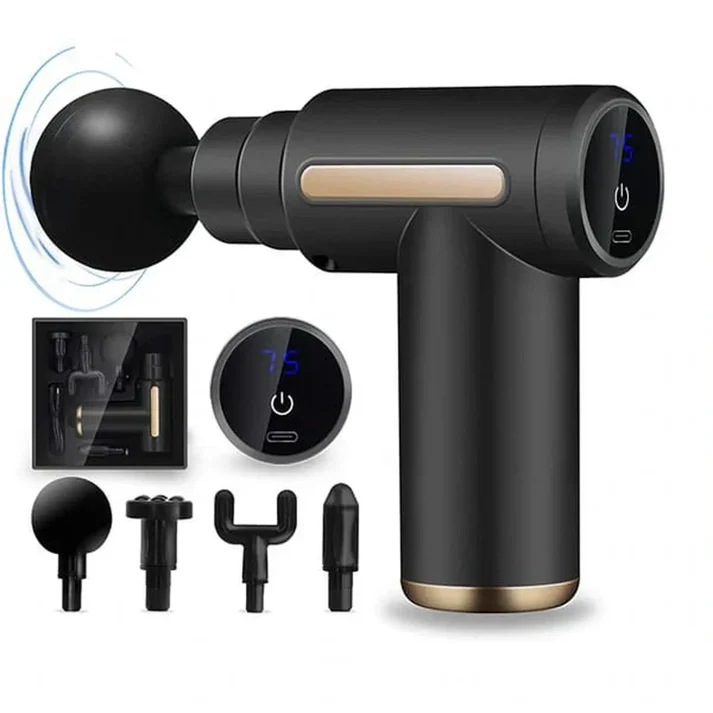
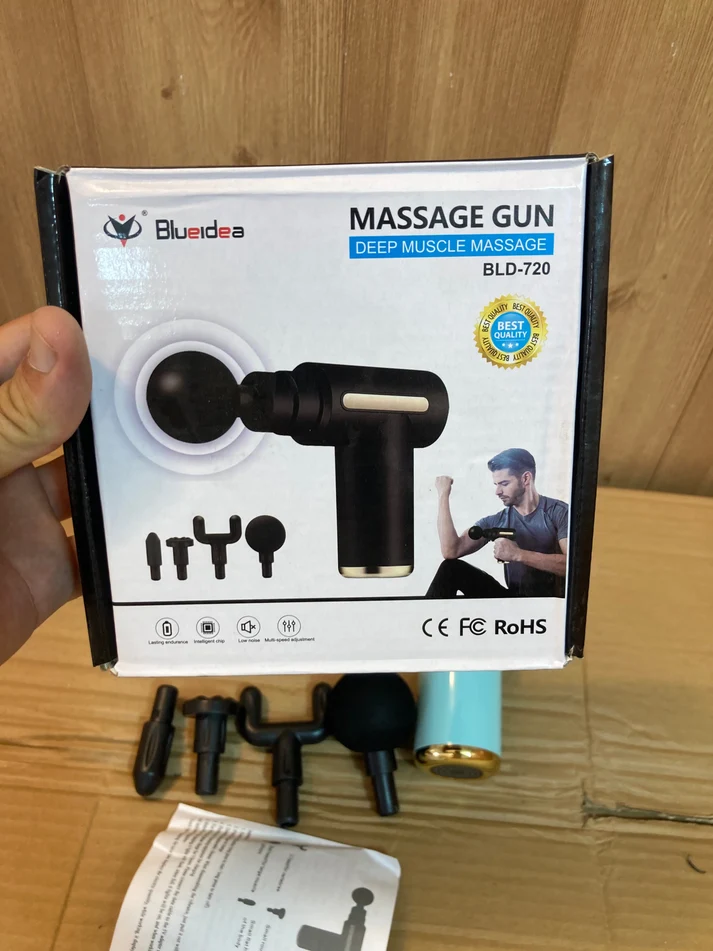
Most massage guns come with 4 interchangeable heads. Each one is designed for a different area:
| Head | Best for | Beginner tip |
|---|---|---|
| Spherical (ball) | Large muscles: thighs, glutes, calves | Start here, it's the most forgiving |
| Flat | All-round use: chest, arms, legs | Good everyday head |
| U-shaped (fork) | Along both sides of the spine, Achilles area | Keep the spine bone between the prongs |
| Cylindrical (bullet) | Small, tight knots: feet, between shoulder blades | Use briefly and on low speed |
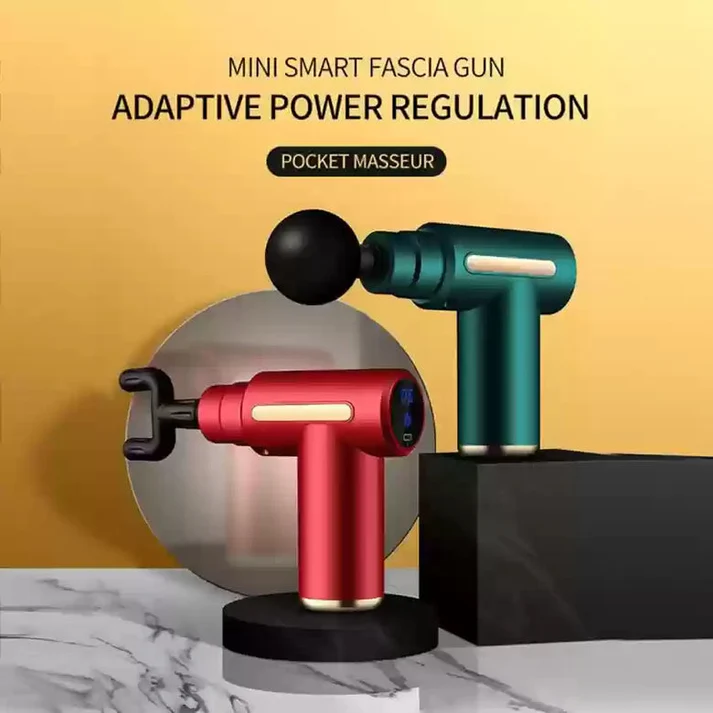
Portable Deep Tissue Massage Gun: Rechargeable, 20W Motor
How to use a massage gun, step by step
- Attach the right head for the muscle you're working on.
- Switch on at the lowest speed before it touches your body.
- Hold it at a 90° angle to the muscle.
- Let it float. Don't press hard. The gun does the work.
- Glide slowly along the length of the muscle, about 2–3 cm per second.
- Pause briefly (a few seconds) on a tight spot, then keep moving.
- Increase speed only if needed, and stay comfortable.
It should feel like a strong massage, never sharp pain. If it hurts, lower the speed, switch to a softer head or move to a different spot.
How long and how often?
| When | Time per muscle | Speed |
|---|---|---|
| Before a workout (warm-up) | 30–60 seconds | Low to medium |
| After a workout (recovery) | 1–2 minutes | Medium |
| After long hours of sitting | 1–2 minutes on shoulders and lower back | Low to medium |
You can use it daily, but keep the total session to around 10–15 minutes.
Where not to use a massage gun
- Front and sides of the neck: there are major blood vessels and nerves here.
- Head and face
- Directly on bones and joints: spine, knees, elbows, ankles
- Bruises, swelling, cuts or fresh injuries
- Varicose veins
If you are pregnant, have a blood clotting disorder, take blood thinners, or have a heart condition, ask your doctor before using a massage gun.
Frequently asked questions
How long should I use it on one muscle?
About 30 seconds to 2 minutes per muscle group. Longer isn't better and can leave the area sore.
Before or after a workout?
Both. 30–60 seconds per muscle before training to warm up, and 1–2 minutes afterwards for recovery.
Where should I not use it?
Avoid the front and sides of the neck, head, spine bones, joints, and any bruised, swollen or injured area.
Is it useful for office workers?
Yes, for tight shoulders, upper back and lower back after long hours of sitting.
Final thoughts
A massage gun is simple to use once you know the basics: the right head, low speed to start, gentle gliding and short sessions. Used this way, it can become part of your daily routine for looser, less achy muscles.
For neck stiffness from phone and laptop use, also read our EMS neck massager guide.
Questions before you order?
Message us on WhatsApp and we'll usually reply within minutes.