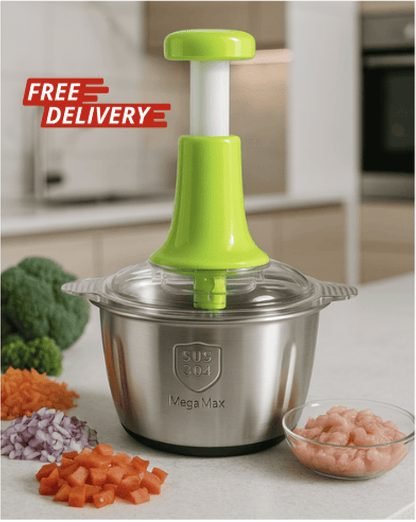
Most desi recipes start the same way: finely chopped onions, tomatoes, green chillies, garlic and ginger. For a big family that can mean 15 to 20 minutes on the chopping board before you even turn on the stove.
A manual push chopper cuts that down to under a minute. You put the vegetables in the bowl, press the lid a few times and you're done. No electricity, no noise and no teary eyes.
Why use a manual chopper?
- Saves time: chop a full bowl of onions in 10–15 pushes.
- Works during load shedding: no plug, no battery, no UPS needed.
- Control over texture: fewer pushes for rough-cut, more for fine keema-style mince.
- No onion tears: the bowl stays closed while you chop.
- Easy to store: much smaller than a food processor.
5 things to check before buying
1. Bowl material: stainless steel beats plastic
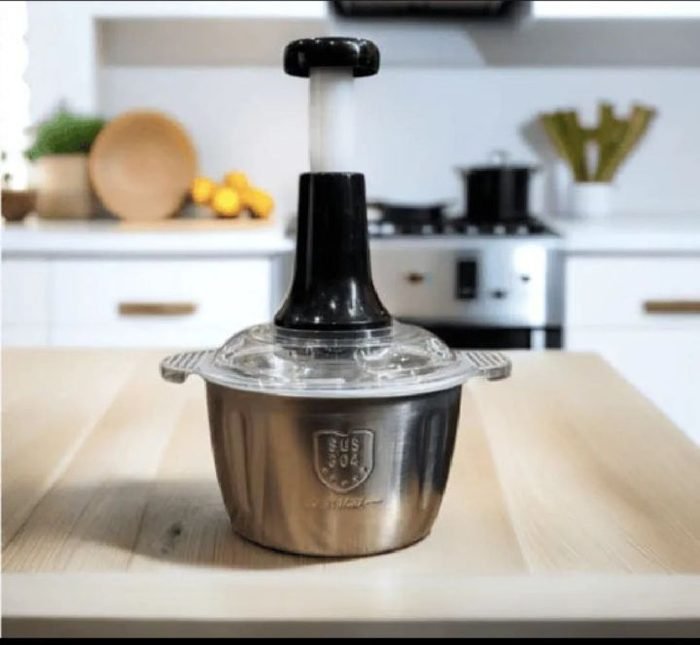
Cheap plastic bowls absorb the smell of garlic and onion, stain yellow from haldi and crack after a few months. A SUS304 stainless steel bowl is food-grade, odour-free and practically unbreakable.
2. Bowl size: 2 litres for most families
Small 500 ml choppers are only good for a few cloves of garlic. For a family of 4 to 6, a 2L bowl lets you prep a whole handi's ingredients in one go.
3. Blade quality and number
Look for multiple stainless steel blades stacked at different heights. They chop evenly from top to bottom. A spare blade set is a big bonus.
4. Non-slip base
You push down with force, so the chopper must not slide on the counter. A rubber non-slip base makes it safer and faster.
5. Easy to open and clean
Blades should lift out easily for washing. Avoid designs with hard-to-reach corners where food gets stuck.
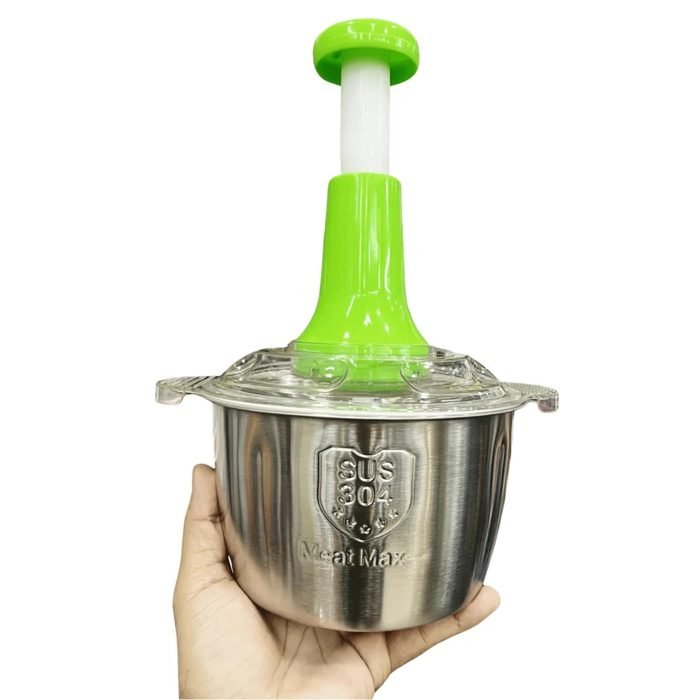
2L Stainless Steel Manual Push Chopper: Meat & Vegetable Mincer
Manual vs electric chopper
| Manual push chopper | Electric chopper | |
|---|---|---|
| Needs electricity | No | Yes |
| Works in load shedding | Always | Only with UPS |
| Texture control | High (you control each push) | Easy to over-blend into paste |
| Noise | Silent | Loud motor |
| Price | Budget-friendly | Usually 2–4× more |
| Motor burnout risk | None | Yes, with heavy use |
If you mostly chop onions, tomatoes, salad and boneless meat, a manual chopper is the smarter buy.
What you can make with it
- Salan base: onions, tomatoes, ginger and garlic in one bowl.
- Kebab and keema mince: small cubes of boneless chicken or beef.
- Kachumber salad and raita: cucumber, onion, tomato and mint.
- Green chutney: coriander, mint and green chillies.
- Pakora mix: onion, potato and spinach, chopped fine.
Cut boneless meat into roughly 2 cm cubes and chill it for 15 minutes before chopping. It minces faster and more evenly.
Cleaning and care
- Rinse right after use, before food dries on the blades.
- Lift the blades out by the centre shaft. Never grab the blade edges.
- Wash the bowl and blades with warm soapy water.
- Wipe the pump lid with a damp cloth. Don't soak it.
- Dry everything fully before putting it back together.
Frequently asked questions
Can a manual chopper chop meat?
Yes. Sharp stainless steel blades can mince boneless chicken and beef for kebabs and keema. Cut it into small cubes first and don't overfill the bowl.
Is a stainless steel bowl better than plastic?
Yes. SUS304 steel doesn't absorb onion and garlic smells, doesn't stain from turmeric and lasts far longer than plastic.
What size should I buy?
For a family of 4 to 6, 2 litres is ideal: big enough for a full handi's prep but still easy to wash and store.
How do I clean it?
Remove the blades carefully, wash the bowl and blades in warm soapy water straight after use and let them dry before reassembling. Don't soak the pump lid.
Final thoughts
A manual chopper is one of those kitchen tools you wonder how you lived without. Choose a stainless steel bowl, a 2L size and multiple sharp blades, and it will save you hours every month.
Also read: Arc lighter vs gas lighter: which is better?
Questions before you order?
Message us on WhatsApp and we'll usually reply within minutes.